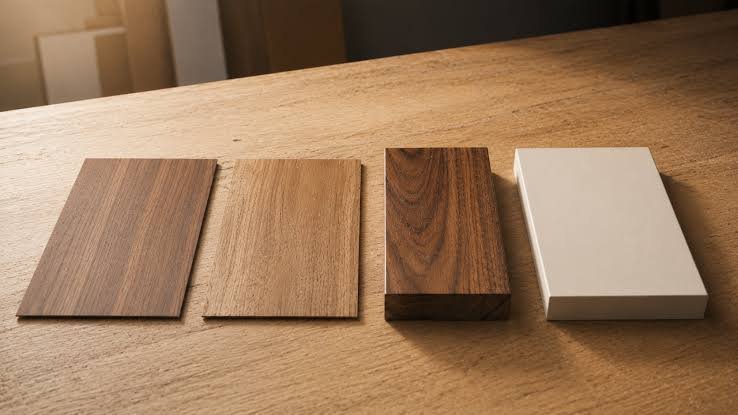
Wood remains a popular material for furniture, interior elements, flooring, doors, cabinets, and decorative products. Its natural appearance makes it attractive, but exposed wood requires an appropriate finish to help maintain its appearance and functional qualities. As environmental considerations and indoor air-quality requirements become more important, water-based coating technologies have gained attention in the finishing industry.
Modern coating formulations often combine polymers, pigments, additives, and mineral materials to achieve a balance between appearance, durability, application behavior, and surface protection. Fine silica materials can play a useful role in this type of formulation because their physical and surface characteristics can influence the behavior of the coating.
Read Also: A Beginner’s Guide to Buying Frozen Seafood in Hong Kong
Why Wood Needs Protective Finishing
Unfinished wood is naturally affected by its surrounding environment. Moisture, temperature changes, sunlight, abrasion, and everyday handling can gradually change the appearance and condition of a wooden surface.
A suitable coating creates a protective layer between the wood and external conditions. Depending on the product, the coating may also provide a desired level of gloss, smoothness, hardness, or resistance to wear.
The formulation must therefore perform several functions at the same time. It needs to spread properly during application, form a consistent film, and provide suitable properties after drying or curing.
The Growing Role of Water-Based Systems
Water-based coatings use water as a major component of the formulation rather than relying primarily on organic solvents.
They are widely considered in applications where manufacturers want to reduce solvent-related emissions and improve working conditions. However, changing from a solvent-based system to a water-based formulation involves technical challenges.
Water evaporation, polymer coalescence, pigment dispersion, viscosity, drying conditions, and substrate interaction all influence the final coating.
This makes formulation design particularly important.
How Fine Silica Can Influence a Coating
Fine silica particles can affect the physical behavior of a coating because of their small particle size and large surface area.
When appropriately incorporated into a formulation, they can influence rheology, suspension behavior, surface characteristics, and mechanical properties.
The result depends heavily on particle characteristics and how well the material is dispersed.
Simply adding a mineral powder does not guarantee better performance. The coating chemistry, particle loading, surface treatment, and mixing process all need to be considered together.
Controlling Viscosity During Application
Coating viscosity affects how easily a product can be applied.
If the formulation is too fluid, it may run or sag on vertical surfaces. If it is too thick, application can become difficult and the resulting film may not have the desired appearance.
Fine silica can be used in formulation development to help adjust rheological behavior.
The objective is to establish a viscosity profile that works with the selected application method, whether spraying, brushing, rolling, or another industrial process.
Achieving a Uniform Film
A high-quality wood finish should generally produce a consistent surface.
Uneven particle dispersion can interfere with film formation and may create visual or mechanical inconsistencies. Proper mixing is therefore essential.
Manufacturers need to evaluate factors such as mixing speed, addition sequence, temperature, formulation viscosity, and processing time.
Laboratory tests can help identify suitable conditions before a formulation is moved to larger-scale production.
Balancing Appearance and Protection
Wood coatings are often selected for both aesthetic and protective reasons.
A finish may need to preserve the visual character of the wood while also providing suitable resistance to everyday wear.
Depending on the application, manufacturers may target different levels of gloss, transparency, hardness, or surface smoothness.
Mineral additives can influence these characteristics, but the desired result depends on the complete formulation rather than a single ingredient.
Surface Preparation Matters
Even a well-designed coating can perform poorly if the wood surface has not been prepared properly.
Dust, grease, moisture, uneven sanding, and contamination can interfere with adhesion and film formation.
Before coating, manufacturers should establish suitable preparation procedures for the particular wood species and application method.
Consistent surface preparation also makes it easier to compare different coating formulations during testing.
Choosing Suitable Silica Materials
Different silica products can have different surface characteristics and physical properties. These differences may affect their interaction with water-based coating systems.
When selecting a material, formulators should consider:
- Particle characteristics
- Surface properties
- Dispersion behavior
- Rheological effect
- Compatibility with the binder
- Required loading
- Processing requirements
- Final surface appearance
Technical information on hydrophilic fumed silica wood coating can provide useful background when evaluating fine silica materials for water-based wood-finishing formulations.
Testing Before Commercial Production
Laboratory testing should be used to compare candidate formulations under controlled conditions.
Useful evaluations can include viscosity, drying behavior, adhesion, hardness, abrasion resistance, gloss, appearance, and water resistance.
Testing should reflect the intended application. A coating designed for furniture may have different requirements from one intended for flooring or architectural woodwork.
Frequently Asked Questions
1. Why are water-based coatings used for wood products?
They can provide a practical finishing option while using water as a major formulation component. Their suitability depends on the specific resin, additives, application process, and performance requirements.
2. What role can fine silica play in wood coatings?
Fine silica can influence properties such as rheology, dispersion behavior, and surface characteristics. The actual effect depends on the formulation and processing conditions.
3. Is proper mixing important when using fine particles?
Yes. Consistent dispersion is important because agglomeration can affect application behavior and final coating properties.
Conclusion
Developing a modern wood finish requires careful consideration of formulation chemistry, application behavior, surface preparation, and final performance. Water-based systems provide useful opportunities for manufacturers, while fine mineral materials can be evaluated as part of efforts to adjust rheology and surface characteristics.
A combination of controlled formulation, proper dispersion, and application-specific testing can help manufacturers develop consistent coatings for different wooden products and production environments.
