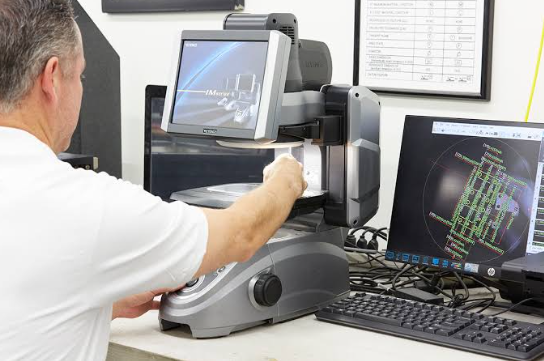
Product development involves many stages, from the first concept to engineering prototypes and eventually mass production. At every stage, manufacturers need evidence that a product can perform as intended. Environmental testing provides one way to generate that evidence under controlled conditions.
Water exposure is particularly relevant for products that may be installed outdoors, transported in changing weather, or exposed to cleaning procedures. By introducing controlled environmental challenges during development, engineers can identify weaknesses before they become expensive production problems.
The Role of Testing in Product Development
A prototype represents an intended design, but it does not automatically prove that the design will perform reliably in real-world conditions.
Testing provides an opportunity to challenge the product and observe its response. When environmental conditions are controlled, engineers can compare different versions of the same design.
This can be especially useful when evaluating:
- Housing designs
- Sealing systems
- Materials
- Connectors
- Protective coatings
- Assembly methods
The resulting information can support further design decisions.
See also: How a Strong Visual Brand Can Make Your Blog Stand Out
Why Water Can Be a Design Challenge
Water can reach a product from different directions and with different levels of force. A product that handles ordinary rainfall may not necessarily withstand a concentrated stream.
This is why manufacturers need to define the environmental scenario they are trying to reproduce.
Testing equipment can help establish consistent exposure conditions, allowing engineers to investigate how a product responds when subjected to a specific water challenge.
Evaluating Enclosures and Seals
Enclosures are commonly used to protect sensitive components from external conditions. However, an enclosure is only as effective as its weakest opening or connection.
Engineers can use controlled testing to examine doors, gaskets, cable entries, seams, and other areas where water might enter.
A LIB industry water spray jetting chamber can be part of a laboratory setup designed to evaluate products against controlled water exposure.
Comparing Design Alternatives
Testing becomes particularly valuable when several designs appear technically similar.
Suppose a manufacturer has developed three enclosure configurations. Instead of relying entirely on theoretical analysis, engineers can expose samples to the same defined conditions.
The results may reveal differences that were not obvious during visual inspection.
This approach can help product teams make design decisions based on observed performance rather than assumptions alone.
Benefits of Early Testing
Testing prototypes early can reduce the risk of expensive late-stage changes.
If a problem is discovered after tooling, production planning, packaging, and distribution have already been finalized, correcting it may require significant resources.
Early environmental evaluation gives engineers an opportunity to modify the design while changes are still relatively manageable.
Testing Different Materials
Materials can behave differently when exposed to moisture.
A manufacturer may compare different plastics, coatings, seals, metals, or composite materials depending on the product. Environmental testing can provide information about how these materials behave under defined conditions.
However, material testing should always be designed around the specific application. A material that performs well in one environment may not necessarily be the right choice for another.
Moving Toward Validation
Once a product design becomes more mature, environmental testing can become part of formal validation.
At this stage, the objective is generally to confirm that the finalized design meets predefined requirements.
Test procedures should be carefully documented, and acceptance criteria should be established before results are reviewed. This helps prevent subjective interpretation of the outcome.
Quality Assurance After Launch
Environmental testing does not necessarily stop when a product enters the market.
Manufacturers may continue testing through quality-control programs, supplier evaluations, production audits, or periodic verification.
This can be useful when production conditions change. For example, a new supplier or manufacturing process may introduce variations that are not immediately visible.
Periodic testing can provide another layer of quality assurance.
Importance of Equipment Maintenance
Reliable testing requires reliable equipment.
Water delivery systems should be maintained according to manufacturer recommendations. Nozzles, pumps, valves, seals, sensors, and drainage systems should be checked regularly.
If testing equipment does not operate consistently, variations in the test system could affect results.
For this reason, laboratories should maintain appropriate inspection, calibration, and maintenance records.
Training Laboratory Personnel
Even advanced equipment requires trained operators.
Technicians should understand the testing procedure, sample preparation requirements, equipment controls, safety considerations, and inspection criteria.
Training should also cover what to do when unexpected conditions occur during testing. Clear procedures reduce confusion and help maintain consistency.
Building a Repeatable Workflow
A practical laboratory workflow might include:
- Define the environmental requirement.
- Prepare the test sample.
- Inspect and document the initial condition.
- Configure the equipment.
- Verify the test parameters.
- Conduct the exposure.
- Perform post-test inspection.
- Record the results.
- Compare against predefined criteria.
- Document any corrective actions.
A consistent workflow can make testing easier to repeat across multiple projects.
Frequently Asked Questions
1. Can environmental testing be performed on prototypes?
Yes. Prototype testing is useful for identifying weaknesses before a product enters final production.
2. Why test multiple design versions?
Testing multiple versions under comparable conditions can help engineers understand how specific design changes affect performance.
3. Does quality testing end after product launch?
Not necessarily. Manufacturers may continue environmental verification as part of quality-control and production-monitoring programs.
Conclusion
Environmental testing can support a product throughout its entire development cycle. From early prototypes to finished production units, controlled testing provides valuable information about how designs respond to defined conditions.
A combination of suitable equipment, standardized procedures, trained personnel, and accurate documentation creates a stronger foundation for product evaluation. By identifying environmental weaknesses early and monitoring performance over time, manufacturers can make more informed engineering and quality decisions.
