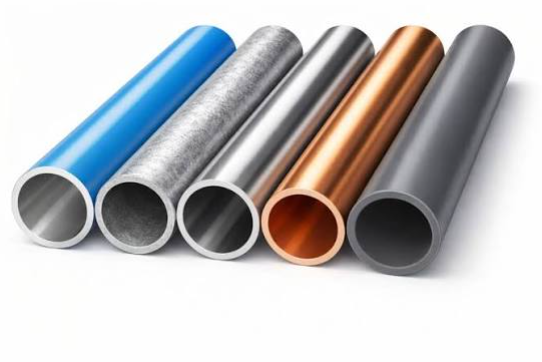
Tubing is used throughout modern industry for transporting fluids, gases, and other materials. It can be found in chemical processing systems, heat exchangers, aerospace equipment, medical technology, energy systems, and specialized manufacturing.
Because tubing often operates as part of a larger system, material selection is extremely important. Engineers need to consider pressure, temperature, corrosion, dimensional requirements, joining methods, and expected service life.
Titanium is one material that can be selected for demanding applications where corrosion resistance and weight efficiency are valuable.
Understanding Titanium Tubing
Titanium tubing is manufactured in different forms and specifications depending on the intended application. Tubes may be produced using welded or seamless manufacturing processes, with each approach offering different characteristics.
A project specification should identify the required dimensions, material grade, wall thickness, tolerances, and applicable standards.
Choosing the correct specification helps ensure that the finished tube fits the intended system.
Welded and Seamless Construction
One important distinction is the manufacturing method.
Welded tubing is produced by forming material and joining the resulting seam. Modern manufacturing techniques can provide consistent welded products for many industrial applications.
Seamless tubing is produced without a longitudinal welded seam and may be selected for applications with particular pressure, mechanical, or design requirements.
Neither category is automatically better for every application. The correct choice depends on the engineering specification.
Corrosion Resistance
Titanium is known for strong corrosion resistance in many environments.
This can be valuable in systems exposed to moisture, chemicals, or other corrosive conditions. Corrosion resistance may help reduce maintenance requirements and contribute to longer service life.
However, engineers should evaluate the specific environment before selecting a material.
Weight Efficiency
Weight can also influence tubing selection.
In transportation and aerospace systems, reducing component mass can contribute to overall efficiency. Titanium’s relatively low density can make it attractive where both corrosion resistance and weight reduction are important.
The design must still satisfy pressure, temperature, and structural requirements.
Dimensional Accuracy
Tubing often needs to connect with other components, so dimensional consistency is important.
Outside diameter, inside diameter, wall thickness, straightness, and tolerance may all affect installation.
Manufacturers should maintain appropriate quality controls to ensure that products remain within the required specification.
Surface Quality
The internal and external surfaces of a tube can be important depending on the application.
Surface condition may affect fluid flow, cleaning, corrosion behavior, appearance, or joining.
For specialized applications, buyers should define surface requirements clearly during procurement.
Selecting a Manufacturer
Choosing a reliable titanium tube manufacturer involves evaluating more than product availability.
Buyers should review manufacturing capabilities, material knowledge, quality-control procedures, dimensional control, inspection systems, and technical communication.
For repeated industrial orders, production consistency is especially important.
Welding and Joining
Tubing rarely operates independently. It usually needs to connect to fittings, valves, tanks, pumps, or other components.
The joining method should therefore be considered during material selection.
Titanium welding requires appropriate procedures because contamination and processing conditions can influence weld quality. Qualified manufacturing processes and suitable handling practices are important for reliable results.
Maintenance Considerations
Material selection can influence long-term maintenance.
A tube with appropriate corrosion resistance may require less frequent replacement in certain environments. However, inspection should still be included in the maintenance program.
Systems should be monitored for signs of leakage, deformation, corrosion, or mechanical damage.
FAQs
1. What industries use titanium tubing?
Applications can include chemical processing, aerospace, marine systems, energy equipment, and specialized industrial manufacturing.
2. What is the difference between welded and seamless tubing?
Welded tubing contains a manufactured longitudinal seam, while seamless tubing is produced without that welded seam. The appropriate option depends on application requirements.
3. What should buyers check when selecting titanium tubing?
Important factors include material grade, dimensions, wall thickness, tolerances, surface requirements, manufacturing process, and applicable standards.
Conclusion
Tubing is an important part of many industrial systems, and material selection can have a significant effect on performance and service life. Titanium offers useful characteristics where corrosion resistance and weight efficiency are important.
By clearly defining specifications and evaluating manufacturing quality, buyers can select tubing that better matches the technical requirements of their systems.
