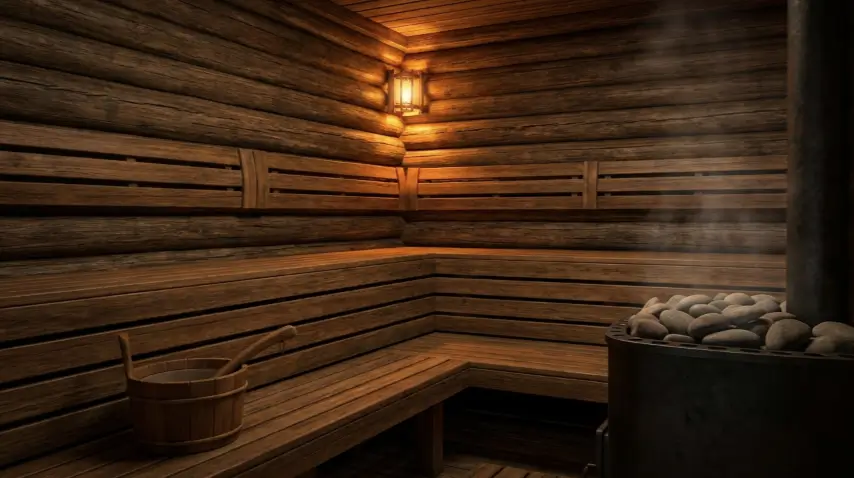
Installing a traditional sauna on a budget comes down to three fixed costs that cannot be shortcut: a dedicated 240-volt electrical circuit sized to the heater, a level and stable foundation or pad, and heater clearances that follow the manufacturer’s certification exactly, not a rough estimate. Skipping or guessing at any of the three is the fastest way to fail an inspection, void a warranty, or create an actual fire risk. Here is what each one actually requires and where a tight budget can and cannot cut corners.
What Electrical Work Does Installation Actually Require?
Almost every electric heater above roughly 6 kilowatts needs a dedicated 240-volt circuit sized to the heater’s stated amperage draw, run directly from the panel with no other loads sharing that breaker. Smaller heaters under about 4.5 kilowatts sometimes run on a lighter circuit, but this must be confirmed against the specific heater’s installation manual rather than assumed from wattage alone. Budget $800 to $2,500 for the electrical work itself depending on the distance from the panel to the cabin and whether the panel has open breaker capacity. A run that requires trenching under a lawn, or a panel that needs a subpanel added because it’s already full, pushes toward the higher end fast, and this is the single line item most first-time buyers underestimate.
What Kind of Foundation or Pad Does It Need?
A traditional sauna, especially an outdoor cabin, needs a level, well-draining base that will not shift or heave with frost over time. A compacted gravel pad, typically 4 to 6 inches deep, is the most budget-friendly option and works well in most climates, running roughly $300 to $700 for a two to four person footprint. A poured concrete pad costs more, generally $600 to $1,200 for the same footprint, but offers a flatter, more permanent surface and is worth the extra cost in regions with significant frost heave or heavy rain. Whichever base is chosen, it needs to sit slightly above surrounding grade so water sheds away from the structure rather than pooling under the floor boards. Skipping the pad entirely and setting a cabin directly on dirt or an existing lawn is the most common budget shortcut, and it is also the one most likely to cause problems within the first year, since uneven settling can rack a door frame out of square and make it stop closing properly.
What Clearances Apply Around the Heater?
Heater clearance requirements come from the specific unit’s certification testing, not a general industry number, and they vary by wattage, guard design, and whether the heater is wall-mounted or floor-standing. The manufacturer’s installation manual specifies exact distances from combustible surfaces on every side, along with any required guard rail, and that document is the only source that should be followed, not a figure remembered from a different heater or a different brand. Wood-fired heaters carry larger clearance requirements than electric models of similar output because of the added heat from the firebox and flue, which is part of why wood-fired installations often cost more overall despite a lower heater price tag.
See also: Business Success Principles Every Founder Should Know
What Clearances Apply to the Outdoor Structure Itself?
Beyond the heater, outdoor cabins need clearance from property lines and other structures, governed by local zoning and setback rules that vary by city and county. Roof overhang and drainage slope need to direct water away from any fence, deck, or neighboring structure, and a disconnect switch within sight of the heater is required in some jurisdictions for outdoor electrical equipment. None of these are optional extras. They are the difference between a build that passes inspection on the first visit and one that gets flagged and delayed while a fix is arranged, which almost always costs more than getting it right the first time.
Do You Need a Permit, and Where Can Budget Corners Actually Be Cut?
Most jurisdictions require a permit for the electrical work at minimum, and often for the structure itself if it’s a permanent outdoor build rather than a temporary or portable one. Checking with the local building department before scheduling any work, rather than after, avoids paying for an inspection failure or a redo. Timelines matter here too: in many areas a permit review and the first available inspection slot together add one to three weeks to the project, which is worth building into a schedule rather than discovering the week the electrician is ready to start. The parts of a budget that can safely flex are wood species, cabin size, and cosmetic finish. Electrical safety, foundation stability, and heater clearance are not places to save money, since a failure in any of the three risks the whole installation. Before hiring an electrician, it helps to know the heater’s exact amperage draw, which product pages spell out by model; a page to browse SweatDecks traditional saunas lists kilowatt rating and recommended circuit size per unit, which is the number an electrician will actually need to quote the job accurately.
Why Getting This Right Also Supports the Case for Owning One
A correctly installed sauna is a sauna that actually gets used consistently, which is where the documented research applies. Large Finnish cohort studies have associated using a sauna four to seven times a week with lower rates of fatal cardiovascular events and all-cause mortality compared with once-weekly use, an association that persisted after adjusting for other risk factors. A 2018 review in Annals of Medicine reported similar joint associations between sauna use and cardiorespiratory fitness on long-term mortality risk. These are population-level associations rather than a guarantee for any one household, and they say nothing about installation quality directly, but a heater that trips breakers, a pad that heaves and cracks, or clearances that failed inspection all lead to the same outcome: a cabin that stops getting used, which is where any potential benefit disappears entirely.
Frequently Asked Questions
What size electrical circuit does a traditional sauna heater need? Most heaters above 6 kilowatts require a dedicated 240-volt circuit sized to the manufacturer’s stated amperage. Smaller heaters may use a lighter circuit; always confirm against the specific spec sheet.
Does a traditional sauna need a permit to install? In most jurisdictions, yes, at least for electrical work, and often for the structure too. Requirements vary by city and county, so check locally before scheduling work.
How much clearance does a sauna heater need from the wall? Clearance is set by the specific heater’s certification and varies by model. Follow the manufacturer’s installation manual exactly, not a general rule of thumb.
Can a homeowner install the electrical work themselves? Some jurisdictions allow it on a permitted project, but a 240-volt sauna circuit is not beginner-friendly and will typically require inspection either way. A licensed electrician is the more common route.
References
- Association between sauna bathing and fatal cardiovascular and all-cause mortality events, JAMA Internal Medicine, 2015
- Joint associations of sauna bathing and cardiorespiratory fitness on cardiovascular and all-cause mortality risk, Annals of Medicine, 2018
- Short-term effects of Finnish sauna bathing on blood-based markers of cardiovascular function in non-naive sauna users, Heart and Vessels, 2018
By Dana Kowalski
